

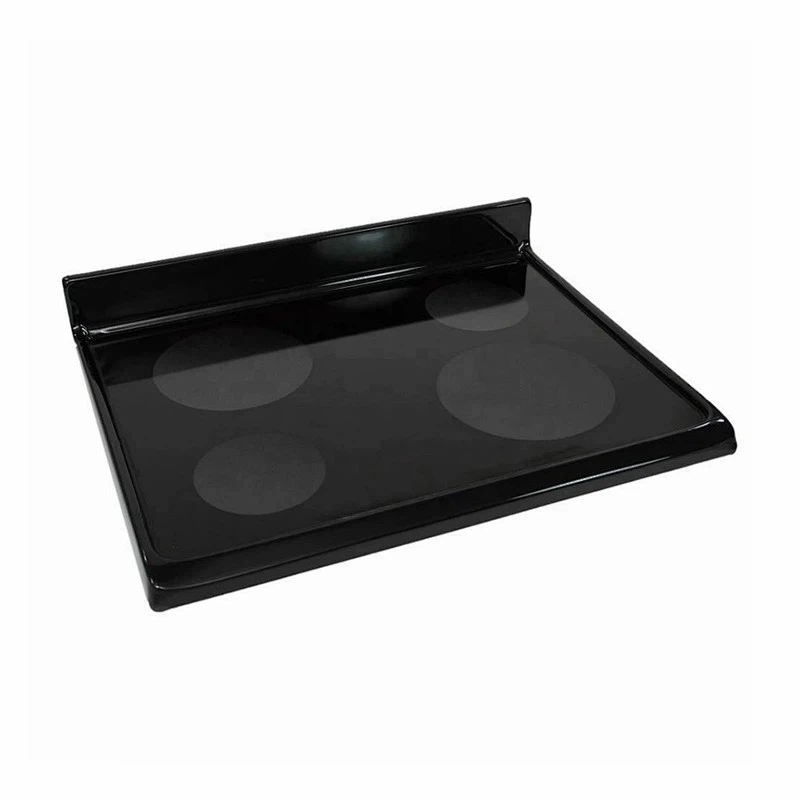
Kitchen tempered glass is almost four times stronger than "regular," or annealed, glass. This effect is achieved by heating the glass at great temperatures and then cooling it at once. This treatment toughens the glass and changes it structure to the benefit of the customers.
Benefits of Kitchen Tempered Glass
It's heat-resistant: Kitchen tempered glass can resist temperatures of up to 470 degrees Fahrenheit. This property makes tempered glass ideal for use in kitchen appliances and in areas like the bathroom, where it will likely be in contact with the heat on a regular basis.
It's safer: The biggest advantage of tempered glass over annealed or "ordinary" glass is that it was designed for safety. Unlike annealed glass, which breaks into large and dangerous shards, tempered glass disintegrates into small granular chunks that are relatively harmless.
It's crystal clear: While the tempering process makes tempered glass super tough, it doesn't affect the clarity of the glass. Tempered glass is crystal clear and transparent, which makes it useful in windows, display cases, and glass doors.
It's tougher: The thermal tempering process used to manufacture tempered glass makes it much stronger than ordinary glass. Tempered glass can stand up to strong winds, direct impact from blows and bumps, and minor explosions.
It doesn't scratch easily: The manufacturing process that makes kitchen tempered glass thermally tough also makes it scratch-resistant. This makes tempered glass an ideal material for glass doors, kitchen appliances, mobile screen protectors, and passenger vehicle windows.
It is available in various designs and patterns: Kitchen tempered glass can be clear, frosted, engraved, stained, and patterned. It's available in an array of patterns and designs to suit your needs.
It's versatile: Tempered glass can be used practically anywhere glass is needed. It makes for an attractive and sturdy frameless shower door, a fully transparent smartphone screen protector, and a seamless stovetop base.


Why Choose us
Expertise
Our team includes qualified and experienced professionals who are experts in their respective fields.
Customer-focused
We prioritize the satisfaction of our clients and make sure their needs are met in a timely and effective manner.
Cutting-edge technology
We constantly update our tools and technology to stay ahead of the competition and provide the best service possible.
High-quality service
We deliver high-quality service, ensuring that our clients receive value for their investment.
Quality
The quality of a company's products or services is crucial. Look for companies that use high-quality materials and have strict quality control processes.
Things To Note Before Installing Tempered Glass In The Kitchen
Style
While both glass sheet and kitchen tempered glass tile give you an easy to wipe down surface, you'll need to think about the style you're trying to achieve when considering tile v. sheet. A sheet is more minimalist, while tile may allow for more creativity.
Placement
Is this going to be in a kitchen or a bathroom? There may be more room in a kitchen for a solid backsplash.
Thickness
Depending on the use of your space, you may want to look at thinner or thicker glass sheet backsplashes. Typically, they range from 1/4" to 1" thick.
Shape
While most glass backsplashes are rectangular, they don't have to be. You can add in curves and other shapes while still allowing the backsplash to cover areas prone to mess.
Applications Of Kitchen Tempered Glass
Passenger vehicles
Passenger vehicles come equipped with tempered glasses. Why? Well, cars are always parked outside and are exposed to regular heating and cooling. Hence, they need optimal thermal resistance, which tempered glasses help deliver seamlessly. Another reason why tempered glasses are used in passenger vehicles is that in case of an accident, tempered glasses won't break into sharp shards. This means they won't pose any threat to the passengers sitting inside!
Residential construction
When it comes to residential construction, tempered glasses have a wide range of applications. Thanks to their strength, durability, and thermal resistance, they can be used as glasses that are placed near the fireplace, glass shelves, cabinets, glass tabletops, and frameless shower doors.
Commercial buildings
There are several building codes that state tempered glasses must be used under several situations. This includes using them for skylights, stairways, doorways, and elevators. They can also be used for frameless glass doors and facades. In general, we can say that in commercial buildings, tempered glasses are used wherever glass poses a life threat in the event of human impact.
Kitchen tempered glass
From refrigerators' glass panels to microwaves' doors, most kitchen appliances today have some form of tempered glass in them. Why? Well, they can hold a lot of pressure and resist high temperatures, hence ensuring there are no glass-related accidents.
After covering the types, properties, and applications of tempered glass, we can say that it is a boon for every industry! From making vehicles safer to making our homes aesthetic, tempered glass has become a benchmark of quality. Owing to its high resistance against temperature and pressure, rest assured they would be useful in most situations.

Impact resistance- In comparison to float glass, kitchen tempered glass has higher impact resistance, enabling it to endure high-stress situations and temperatures.
Strength- Did you know that tempered glass can be 3 to 7 times stronger than annealed glass? This makes it ideal for those purposes where there is a higher frequency of heavy loads.
Versatility- Kitchen tempered glass can be moulded and shaped into different forms and styles. Hence, it can be used for a wide variety of purposes, ranging from cars to homes and refrigerators.
Choose Your Kitchen Tempered Glass
Transparent
Good for: All kitchens, all styles. Plain, kitchen tempered glass is a classic, fail-safe choice, as well as the most widely available. Select a tempered style to guard against breakage. You can either use single flat panels, as in this kitchen, or go with decorative mullions to enhance your kitchen's design.
Also consider ... There's no hiding anything behind this type of glass. You'll need to make sure that whatever it frames is neat and well arranged, unless you're comfortable with guests getting a peek at your crumpled bags of potato chips and collection of cartoon mouse mugs. Plus, it shows smudges and fingerprints instantly. Keep the window cleaner handy.
Frosted
Good for: Modern kitchens and nonneatnik homeowners. Frosted glass, which is blasted with sand or grit to achieve its translucent quality, lends a cool, sleek feel to a space. Because it screens the objects it fronts (some better than others), you can probably get away with a stack of mismatched melamine or a jumble of tumblers. You also can have frosted glass etched with custom designs to add one-of-a-kind style.
Also consider ... Frosted doesn't mean opaque. Visitors might not be able to read the words on your cereal box through the glass, but they can tell when the items on the shelves have collapsed into a big mess. Dedicate a little time daily or weekly to keeping things organized.
Textured
Good for: Eye appeal. Textured glass is just what it sounds like: glass molded or embossed with a pattern for visual and tactile appeal. It can be ribbed, pebbled, grooved, beveled or otherwise patterned. It's popular not only because of the layer of interest it adds, but because it helps to blunt the outlines of cabinet flotsam within, and it masks smears and streaks well.
Also consider … With some textures, you run the risk of a dated look down the road. (Anyone remember the random, crackly patterns of the 1970s?) The simplest styles, such as ribbed glass, are less likely to fall out of favor.
Seeded
Good for: Vintage chic. Seeded kitchen tempered glass, which dates back to colonial times, is pocked with tiny bubbles, which give it its name. It usually has a wavy quality as well. Its hand-crafted look and old-fashioned appeal make it a natural fit for cottage, Shaker and traditional kitchens.
Also consider ... The bubbles and dots in seeded glass can be tiny, large or anything in between (authentic vintage seeded glass will often have smaller bubbles). If you want to showcase dishware, collectibles or other cabinet contents, go for smaller seeding. Larger bubbles can better obscure less pristine displays.
Leaded
Good for: Creating an elegant, traditional feel. Leaded glass has an appealing artisanal quality, and you can spin its design in any number of directions, from Gothic to Craftsman. If you'd like a hint of color, you can also choose stained or art glass - especially nice in backlit cabinetry, which sets the different hues aglow.
Also consider … Want the real deal? You can find antique leaded glass panels at salvage shops, flea markets and specialty retailers, and through online suppliers.
Several Factors For Installing Kitchen Tempered Glass In The Kitchen
The wall where the kitchen tempered glass will be installed must be clean, dry, and free of any existing tiles, wallpaper, or paint. The wall should also be flat and level. Any bumps or unevenness can affect the installation and the appearance of the splashback.
Before ordering a splashback, accurate measurements of the wall are essential. This includes measuring the height and width of the area where the splashback will be installed, as well as any cut-outs required for sockets, switches, or other fixtures.
Choose a high-quality, toughened glass splashback that is at least 6mm thick for durability and safety. There are different types of kitchen tempered glass available, including clear, tinted, painted, and printed options, so choose one that complements the style and design of your kitchen.
Glass splashbacks come in a wide range of colours and designs, so choose one that fits your personal taste and complements your kitchen decor. Consider the overall colour scheme, style, and materials of your kitchen when making your selection.
The installation method for a glass splashback can vary depending on the type of wall and the size and weight of the splashback. It is often worth seeking the help of a professional installer if you are unsure.
What Types Of Tempered Glass Are There For Kitchens?
Seeded glass
Demonstrative of hand-blown glass from long, long ago, seeded glass is essentially glass that has been engraved with small air pockets and specks, thereby giving it its name 'seeded' glass.
Notably, beyond all the pristine pictures you've probably seen in magazines and on the internet, there's a good chance you've noticed seeded glass inserts in cupboards and cabinets from the days of yore. But lately, they've made a comeback in modern interior designing and how!
For the most part, this type of glass has a wavy quality that lends it an ethereal appeal, but we love it because it gives the cabinet a romantic, nostalgic bid that, if combined with matching décor and accented lighting, can become the most loved spot in the house.
And if you're thinking of utilizing seeded glass, do remember that there are a lot of options when it comes to the sizes of bubbles and specks, so one can expect the range to start with a few bubbles and specks here and there, to large extensively spread out ones.
Leaded kitchen tempered glass
Leaded kitchen tempered glass, or crystal – if you're a fine glassware fan, can pretty much look and feel like regular glass, understandably leaving you a tad bit confused about the difference. There is a subtle distinction, though. Leaded glass is comprised of the same essential elements that are required for regular manufactured glass, with one critical difference: lead oxide.
Utilized by glass makers as a means of quality improvement, leaded glass is increasingly used for kitchen cabinets (as against standard glass) because of its physical properties, i.e., cut and lucidity.
Leaded glass makes for a luxurious, conventional feel, and it does have an engaging, distinctive quality that can transport you to another realm altogether. The beauty of leaded glass is that you can use it to turn on the 'décor look' in any number of bearings, and if you'd like a trace of shading, you can even likewise pick special artistry glass inserts or stained ones.
Textured kitchen tempered glass
Perfect for kitchen cabinets and a host of different applications where clouded visibility or privacy is wanted, the textured kitchen tempered glass will fit like a glove.
More importantly, shaped or emblazoned with visual and material intrigue, textured glass works to help pop an otherwise basic décor or serve as the foundation to a stained glass kitchen cabinet insert.
Textured glass is offered in a wide assortment of surfaces and enhancing designs that can be pleated, geometric, reeded, organic, ribbed, pebbled, inclined or smattered with generic patterns. Either way, textured glass is the prevalent trend in kitchen cabinet glass, not just because of the layer of intrigue it includes, but also because it effectively blurs any messy junk inside.
Clear, transparent kitchen tempered glass
Clear, transparent kitchen tempered glass is the most widely recognized and possibly, the most adaptable of all. It's a 'one size fits all' type of glass, for its clear, transparent quality ensures that every decor, every kitchen type, seamlessly melts in with its no-nonsense look easily.
As it were, transparent glass makes for a safe decision and will dependably look pleasant. But of course, you must bear in mind that it's plain Jane regularity pays little mind to the most recent styles. So if you're willing to ignore the simplicity, do remember that there are a couple of interesting points for this situation.
Despite the fact that transparent glass is the most generally available variant, its drawbacks of it have a way of turning people off from using it wholeheartedly.
Company Advantages
Heyuan Hongwei Glass Co., Ltd. located in Heyuan City, the National High-tech Development Zone.The product is positioned in the high-end TV, monitor, home-used air conditioning, refrigerator and other household appliances related to glass products.The company has a 10000 square meters modern deep processing room ,with cutting and grinding integrated molding edge grinding machine, automatic inspection equipment, CNC machining center, continuous tempering furnace and other glass deep processing equipment,Ensure that the glass is cut, grinded, special-shaped, and tempered (2-5mm) for finishing,Specializing in the production of high-precision TV, LCD/LED screen protection glass, AR anti-reflection glass, digital picture frames, advertising machines, photocopier glass, etc.

Our Certificate
Our company passes ISO90001. 3C Certification.Our products comply with ROHS, REACH, EN12150-1 and other standards

Asked Questions
Q: Is tempered glass good for kitchen?
Q: Is glass good for kitchen cabinets?
Q: Can you put hot pans on tempered glass?
Q: Do kitchen windows need to be tempered?
Q: Why do bathrooms have tempered glass?
Q: Do kitchen cabinets need tempered glass?
Q: Why we should not use tempered glass?
Q: What is the lifespan of tempered glass?
Q: What is the failure rate of tempered glass?
Q: Can tempered glass go in the dishwasher?
Q: Does tempered glass mean oven safe?
Q: How far off the floor should tempered glass be?
Q: Is tempered glass required next to a door?
Q: Why does tempered glass break so easily?
Q: Is tempered glass cabinet safe?
Q: What type of glass is best for kitchen cabinets?
Q: Do glass shelves have to be tempered?
Q: Are cheap tempered glass worth it?
Q: Does tempered glass weaken over time?
Q: When should you use tempered glass?
Hot Tags: kitchen tempered glass, China kitchen tempered glass manufacturers, suppliers, factory, 55 110 Display LCD Touch Panels Panel, High Temperature Tempered Glass, Kitchen Tempered Glass, Intelligent Heating Control Panel Glass, Electronic Custom Screen Print Tempered Glass Panel, Tempered Transparent for Solar Glass 3mm


