

As a seasoned supplier of Oven Tempered Glass, I understand the critical importance of ensuring the highest quality for our products. Oven tempered glass is not just a component; it's a safety - critical element in modern kitchen appliances. In this blog, I'll share some professional methods on how to test the quality of oven tempered glass.
Visual Inspection
The first step in testing oven tempered glass is a thorough visual inspection. This is a fundamental yet crucial process that can quickly identify obvious flaws. Start by examining the glass under bright, even lighting. Look for any visible scratches, chips, or cracks on the surface. Scratches can weaken the glass over time, especially when exposed to the high - temperature fluctuations inside an oven. Even a small chip can be the starting point for a larger crack, which can compromise the glass's integrity and pose a safety risk.
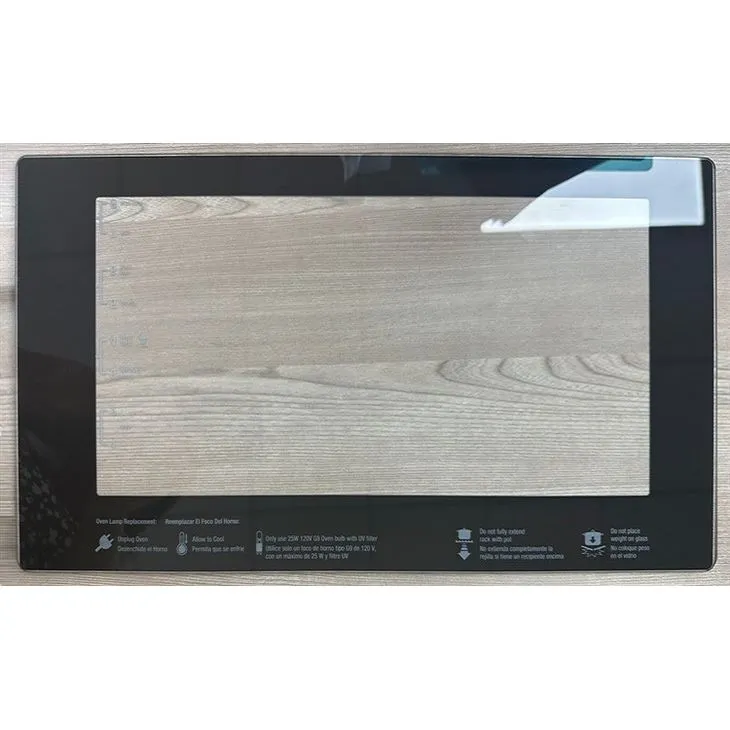

Check for inclusions within the glass. These are small particles or bubbles that may have been trapped during the manufacturing process. Inclusions can act as stress concentrators, making the glass more likely to break under stress. For example, if there is a large air bubble in the glass, the uneven expansion and contraction during heating and cooling can cause the glass to crack around the bubble.
Surface Flatness Test
A flat surface is essential for oven tempered glass. An uneven surface can lead to improper sealing of the oven door, allowing heat to escape and reducing the oven's energy efficiency. To test the surface flatness, you can use a straightedge. Place the straightedge across different areas of the glass. Any gaps between the straightedge and the glass surface indicate unevenness. You can also use a precision flatness gauge, which can provide more accurate measurements. A tolerance of no more than a few thousandths of an inch is typically acceptable for oven tempered glass.
Strength and Impact Resistance Testing
Oven tempered glass needs to withstand significant mechanical stress, especially during normal use when the oven door is opened and closed. One common method to test impact resistance is the ball drop test. A steel ball of a specific weight and size is dropped from a certain height onto the center of the glass. The height and weight of the ball are determined based on industry standards. If the glass shatters or cracks upon impact, it fails the test.
Another way to test strength is the four - point bending test. In this test, the glass is supported at two points and loaded at two other points. The load is gradually increased until the glass breaks. The maximum load the glass can withstand before breaking is a measure of its bending strength. High - quality oven tempered glass should have a high bending strength to resist the stresses that occur during normal use.
Thermal Resistance Testing
Since oven tempered glass is constantly exposed to high temperatures, thermal resistance is a key quality factor. One way to test thermal resistance is the thermal shock test. The glass is first heated to a high temperature, typically close to the maximum operating temperature of an oven, and then rapidly cooled. This simulates the sudden temperature changes that occur when an oven is opened or closed. If the glass cracks during the thermal shock test, it indicates poor thermal resistance.
You can also measure the coefficient of thermal expansion (CTE) of the glass. A low CTE is desirable for oven tempered glass because it means the glass will expand and contract less with temperature changes. This reduces the risk of thermal stress - induced cracking. Specialized equipment is required to accurately measure the CTE.
Chemical Resistance Testing
Oven environments can be chemically harsh, with the presence of cleaning agents and food residues. Chemical resistance testing involves exposing the glass to various chemicals commonly found in ovens, such as acidic or alkaline cleaning solutions. The glass is soaked in these solutions for a specific period, and then its surface is examined for any signs of corrosion, discoloration, or loss of strength. High - quality oven tempered glass should be resistant to chemical attack to maintain its appearance and performance over time.
Optical Clarity Testing
Good optical clarity is important for oven tempered glass, especially for the inner door glass where users can see the food inside the oven. To test optical clarity, you can use a haze meter. Haze is a measure of the scattering of light passing through the glass, which can make the view through the glass appear blurry. A low haze value indicates high optical clarity. You can also visually inspect the glass by looking at a high - contrast object through it. Any distortion or blurring of the object suggests poor optical clarity.
Edge Quality Inspection
The edges of oven tempered glass are particularly vulnerable to damage. Rough or poorly finished edges can be a source of stress concentration and can also pose a safety hazard. You can use a magnifying glass to inspect the edges for chips, roughness, or micro - cracks. The edges should be smooth and free of any sharp points. Additionally, the edges should be properly rounded to reduce the risk of stress concentration.
Screen Print Tempered Glass Panel and Related Products
Some oven tempered glass comes with screen - printed designs or markings. For Screen Print Tempered Glass Panel, it's important to test the adhesion of the screen - print. You can use a tape test. Apply a piece of adhesive tape to the screen - printed area and then quickly remove it. If any of the print comes off with the tape, the adhesion is poor.
We also offer Belling Inner Door Glass and Inner Glass for Oven Door. These products go through the same rigorous testing procedures to ensure they meet the highest quality standards.
Conclusion
Testing the quality of oven tempered glass is a multi - step process that involves a variety of methods. From visual inspection to complex strength and thermal resistance testing, each step is crucial to ensure that the glass meets the safety and performance requirements of modern ovens. As a supplier, we are committed to providing only the highest - quality oven tempered glass to our customers.
If you are in the market for oven tempered glass and want to discuss your specific requirements, feel free to reach out to us. We are ready to provide you with detailed product information and work with you to find the best solution for your needs.
References
- ASTM International Standards for Glass Testing
- ISO Standards for Oven Appliance Components
- Industry - specific research papers on tempered glass manufacturing and testing