

Hey there! I'm a supplier of 2mm Touch Access Lock Glass, and today I wanna chat about one super - important question: Is 2mm Touch Access Lock Glass resistant to chemicals?
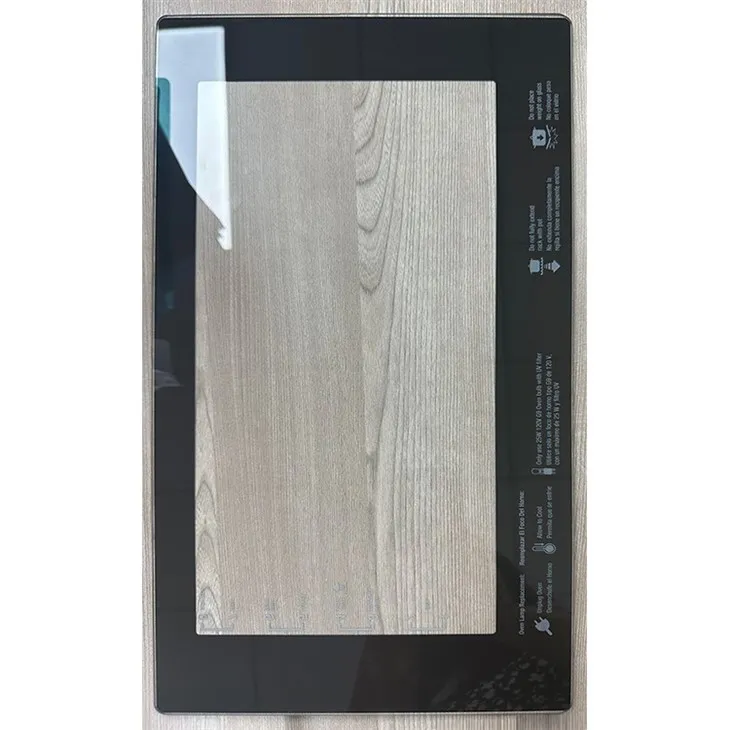
First off, let's understand what 2mm Touch Access Lock Glass is. It's a thin yet sturdy piece of glass that's used in various access lock systems. Its thinness allows for easy integration into different devices, while still maintaining a good level of strength. And in our modern world, where access control is a big deal, this glass plays a crucial role.
Now, when it comes to chemical resistance, it's not a one - size - fits - all answer. Different chemicals have different effects on the glass, and it all boils down to the composition of the glass and the nature of the chemicals.
Composition of 2mm Touch Access Lock Glass
The 2mm Touch Access Lock Glass we supply is usually made through a tempering process. Tempered glass is known for its enhanced strength compared to regular glass. During tempering, the glass is heated to a high temperature and then rapidly cooled. This creates a surface compression and internal tension within the glass, which gives it its toughness.
The chemical composition of tempered glass mainly consists of silica (SiO₂), along with small amounts of other compounds like sodium oxide (Na₂O), calcium oxide (CaO), and magnesium oxide (MgO). These components give the glass its basic structure and properties.
Resistance to Common Chemicals
Acids
Acids can be a real test for any glass. Weak acids like acetic acid (found in vinegar) generally have little to no effect on 2mm Touch Access Lock Glass. The glass can withstand contact with vinegar for extended periods without any visible damage. However, strong acids are a different story. Hydrofluoric acid (HF), for example, is extremely corrosive to glass. It reacts with the silica in the glass to form silicon tetrafluoride (SiF₄) and water. Even a small amount of hydrofluoric acid can quickly etch and damage the surface of the glass, compromising its integrity and functionality.
Bases
Bases also have varying effects on the glass. Weak bases like sodium bicarbonate (baking soda) solutions are relatively harmless. They won't cause any significant damage to the 2mm Touch Access Lock Glass. But strong bases such as sodium hydroxide (NaOH) can react with the glass over time. The hydroxide ions in the strong base can attack the silica network in the glass, leading to surface degradation. Prolonged exposure to strong bases may cause the glass to become cloudy or develop a rough surface.
Organic Solvents
Many organic solvents, like ethanol and acetone, are commonly used in cleaning and maintenance. Generally, 2mm Touch Access Lock Glass is resistant to these solvents. Ethanol, which is often used in disinfecting wipes, can be safely used to clean the glass surface without causing any damage. Acetone, although a more powerful solvent, can also be used in moderation. However, if the glass is in contact with acetone for a very long time or in high concentrations, it may cause some minor swelling or surface changes in the long run.

Factors Affecting Chemical Resistance
It's not just the type of chemical that matters; there are other factors too.
Temperature
Higher temperatures can accelerate chemical reactions. If the 2mm Touch Access Lock Glass is exposed to a chemical at an elevated temperature, the reaction rate between the glass and the chemical may increase. For example, a warm solution of a weak acid may cause more damage to the glass than the same acid at room temperature.
Concentration
The concentration of the chemical also plays a huge role. A dilute solution of a strong acid may have a much milder effect on the glass compared to a concentrated solution. So, even if a chemical is known to be corrosive to glass, a very dilute form of it may not cause significant harm.
Applications and Chemical Exposure
The 2mm Touch Access Lock Glass has a wide range of applications, and each application comes with its own set of potential chemical exposures.
In Building Access Systems
In building access control systems, the glass may be exposed to common cleaning agents. These are usually mild chemicals that are safe for the glass. However, in industrial buildings, there may be a higher risk of exposure to more aggressive chemicals. For example, in a manufacturing plant where acids or bases are used in the production process, there's a chance that the access lock glass could come into contact with these chemicals accidentally.
In Electronic Devices
When used in electronic devices, the glass may be exposed to substances like sweat from human hands. Sweat contains salts and other minor chemicals. While these are generally not harmful to the glass, over time, the salts can build up on the glass surface, which may require regular cleaning.
Our Quality Assurance
As a supplier, we take chemical resistance seriously. We conduct various tests on our 2mm Touch Access Lock Glass to ensure its performance. We expose samples of the glass to different chemicals under controlled conditions to measure its resistance. This helps us guarantee that the glass we supply can withstand normal chemical exposures in its intended applications.
Related Products
If you're interested in other types of tempered glass products, we also offer Elevator Touch Control Glass Panel, Touch Panel Glass for Household Appliance, and Tempered Glass Panel for Electronic Scale. These products also have their own unique chemical resistance properties based on their specific applications.
Contact for Purchase
If you're in the market for 2mm Touch Access Lock Glass or any of our other tempered glass products, we'd love to hear from you. Whether you have questions about chemical resistance, need a custom order, or just want to discuss your requirements, feel free to reach out. We're here to provide you with high - quality glass solutions that meet your needs.
References
- "The Science of Glass" by John C. Mauro
- "Handbook of Glass Properties" edited by Werner Vogel