

In the realm of modern security and access control systems, 3mm touch access lock glass has emerged as a crucial component. As a supplier of this specialized glass, I am often asked a pivotal question: "Is 3mm touch access lock glass scratch - resistant?" This blog post aims to delve deep into this query, providing a comprehensive analysis based on scientific knowledge and real - world experiences.
Understanding 3mm Touch Access Lock Glass
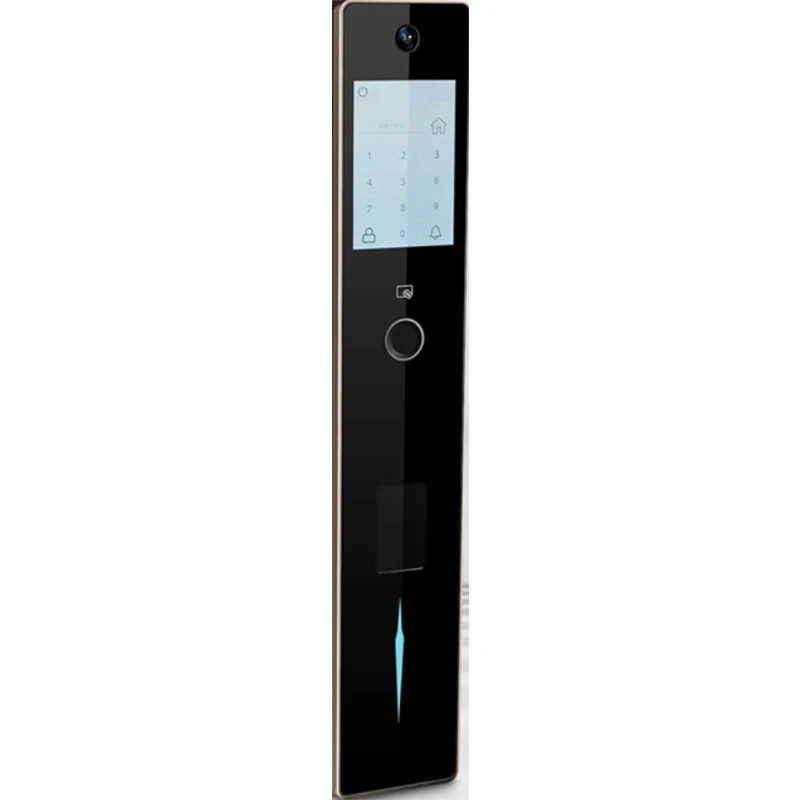
Before we discuss scratch resistance, it's essential to understand what 3mm touch access lock glass is. This type of glass is specifically designed for use in access control systems, such as fingerprint scanners, keyless entry pads, and other touch - based security devices. The 3mm thickness strikes a balance between durability and functionality. It's thick enough to provide a certain level of physical protection to the underlying components while still being thin enough to allow for sensitive touch interaction.
Our 3mm touch access lock glass comes in various forms, including Touch Panel Tempered Glass, which is widely used in touch - screen applications. The tempering process enhances the glass's strength and makes it more resistant to breakage compared to ordinary glass. Another variant is the Smart Access Control Anti - fingerprint Tempered Glass Panel, which not only offers touch functionality but also has an anti - fingerprint coating, making it ideal for high - traffic areas where smudges and fingerprints can be a nuisance. Additionally, the Automatic Door Keyless Lock Protects Tempered Glass is designed to safeguard the keyless entry systems of automatic doors.
Factors Affecting Scratch Resistance
Scratch resistance is determined by several factors, and understanding these can help us assess whether 3mm touch access lock glass is truly scratch - resistant.
Material Composition
The base material of the glass plays a significant role in its scratch resistance. Most 3mm touch access lock glass is made of tempered glass, which is created by heating the glass to a high temperature and then rapidly cooling it. This process creates internal stresses that make the glass stronger and more resistant to scratches. However, the exact composition of the glass, including the presence of additives and impurities, can also affect its scratch - resistant properties. For example, glasses with a higher silica content tend to be harder and more scratch - resistant.
Surface Treatment
Surface treatments can greatly enhance the scratch resistance of the glass. One common treatment is the application of a hard - coating. This coating forms a protective layer on the surface of the glass, acting as a barrier against scratches. The quality and thickness of the hard - coating are crucial factors. A well - applied and thick hard - coating can significantly improve the glass's ability to withstand scratches from everyday use, such as contact with keys, coins, or other hard objects.
Usage Environment
The environment in which the 3mm touch access lock glass is used also impacts its scratch resistance. In a clean, low - traffic area, the glass is less likely to be scratched compared to a high - traffic public area. For instance, in an office building lobby where people are constantly touching the access control panel, the glass is more exposed to potential scratching agents. Abrasive particles in the air, such as dust and sand, can also cause scratches over time if they come into contact with the glass surface.
Testing Scratch Resistance
To determine the scratch resistance of 3mm touch access lock glass, various testing methods are employed.
Pencil Hardness Test
The pencil hardness test is a simple and widely used method. In this test, pencils of different hardness levels are used to scratch the glass surface. The hardness of the pencil that just begins to scratch the glass is recorded as the glass's pencil hardness. A higher pencil hardness indicates better scratch resistance. For example, if a glass can withstand scratching from a 3H pencil but is scratched by a 4H pencil, its pencil hardness is 3H.

Taber Abrasion Test
The Taber abrasion test is a more comprehensive test that measures the wear and tear on the glass surface over time. In this test, a rotating abrasive wheel is pressed against the glass surface for a specified number of revolutions. The change in the glass's optical properties, such as haze and light transmission, is measured before and after the test. A lower change in these properties indicates better scratch resistance.
Real - World Performance
In real - world applications, 3mm touch access lock glass generally performs well in terms of scratch resistance. Our customers have reported that the glass can withstand normal wear and tear in most environments. However, in extremely harsh conditions, such as in industrial settings with a high concentration of abrasive particles, the glass may show signs of scratching over time.
In high - traffic public areas, the anti - fingerprint tempered glass panels have proven to be particularly effective. The anti - fingerprint coating not only reduces smudges but also provides an additional layer of protection against scratches. The tempered glass structure also ensures that even if a scratch does occur, it is less likely to lead to the glass breaking.
Maintaining Scratch Resistance
To maintain the scratch resistance of 3mm touch access lock glass, proper maintenance is essential.
Cleaning
Regular cleaning with a soft, lint - free cloth and a mild glass cleaner can help remove dirt and debris from the glass surface. Avoid using abrasive cleaners or rough materials, as these can cause scratches. For example, using a paper towel with a rough texture to clean the glass can leave micro - scratches on the surface.
Protection
In high - risk areas, additional protection can be provided. For instance, using a protective film on the glass surface can act as a sacrificial layer, absorbing scratches instead of the glass itself. This film can be easily replaced when it becomes too scratched.
Conclusion
So, is 3mm touch access lock glass scratch - resistant? The answer is yes, to a large extent. Thanks to its tempered material, surface treatments, and proper design, it can withstand a significant amount of wear and tear in normal usage scenarios. However, its scratch resistance is not absolute and can be affected by factors such as material composition, surface treatment, and usage environment.
If you are in the market for high - quality 3mm touch access lock glass for your security and access control systems, we invite you to contact us for a procurement discussion. Our team of experts can provide you with detailed information about our products and help you choose the most suitable glass for your specific needs.
References
- ASTM International. (20XX). Standard test methods for pencil hardness of organic coatings.
- ISO. (20XX). Standard for abrasion resistance testing of glass materials.
- Various research papers on glass science and engineering, discussing the properties and performance of tempered glass.