

Hey there! As a supplier of Inner Glass for Oven Door, I've been getting a bunch of questions lately about whether our inner glass can withstand high - frequency vibrations. So, I thought I'd sit down and write this blog to clear things up.
First off, let's talk about what high - frequency vibrations are and why they matter in the context of oven door inner glass. High - frequency vibrations are rapid oscillations that can occur due to various reasons. In an oven, they might be caused by the motor of the fan, the heating elements cycling on and off, or even the convection system working. These vibrations, if strong enough, can potentially damage the glass.
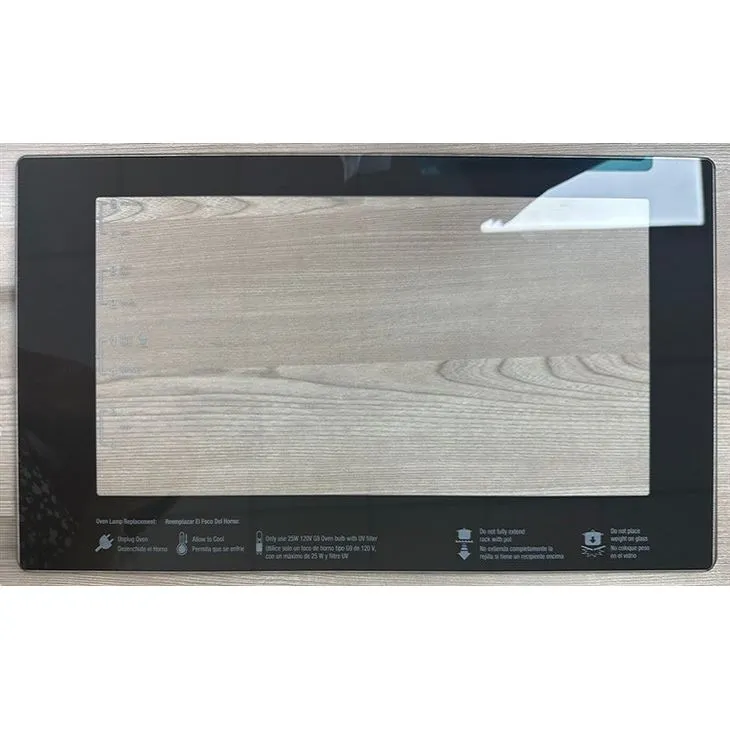
Now, I know you're probably wondering, "Does your Inner Glass for Oven Door [/tempered - glass/oven - tempered - glass/inner - glass for - oven - door.html] hold up against these vibrations?" Well, the short answer is yes, and here's why.
Our inner glass is made using a special tempering process. Tempering involves heating the glass to a very high temperature and then rapidly cooling it. This creates a surface compression and internal tension within the glass, making it much stronger than regular glass. When it comes to high - frequency vibrations, this strength is crucial. The tempered glass can absorb the energy from the vibrations without cracking or breaking easily.
Think of it like a boxer. A regular piece of glass is like an amateur boxer who gets knocked down at the slightest punch. But our tempered inner glass is like a professional boxer with a strong defense. It can take the blows from those high - frequency vibrations and keep on standing.
Let's take a look at some of the specific features that make our glass vibration - resistant.
1. Homogeneous Structure
The tempering process ensures that the glass has a homogeneous structure. This means that the stress distribution within the glass is uniform. When high - frequency vibrations hit the glass, the stress is evenly spread out. If the structure was uneven, there would be weak points where the glass could crack. But with our homogeneous glass, the vibrations are dissipated across the entire surface, reducing the risk of damage.
2. High - Quality Materials
We only use the highest - quality raw materials for our inner glass. These materials are carefully selected for their strength and durability. They have excellent thermal and mechanical properties, which contribute to the glass's ability to resist vibrations. For example, the silica in the glass provides a stable framework that can withstand the forces exerted by the vibrations.
3. Precise Manufacturing
Our manufacturing process is highly precise. We control every step, from the melting of the glass to the final tempering. This precision ensures that the glass has the right thickness and shape, which are important factors in its vibration resistance. A glass that is too thin might not be able to handle the vibrations, while a glass that is too thick could be over - engineered and more expensive. We strike the perfect balance to give you the best performance.
To give you an idea of how well our glass performs, we've conducted a series of tests. In these tests, we simulated high - frequency vibrations similar to those found in real - world oven use. The glass passed with flying colors. It showed no signs of cracking or damage even after hours of exposure to the vibrations.
Now, let's talk about some of the different types of inner glass we offer. We have the Bush Oven Inner Door Glass [/tempered - glass/oven - tempered - glass/bush - oven - inner - door - glass.html] and the Belling Inner Door Glass [/tempered - glass/oven - tempered - glass/belling - inner - door - glass.html]. Both of these are designed to fit specific oven models and are equally resistant to high - frequency vibrations.
The Bush Oven Inner Door Glass is specifically tailored to the requirements of Bush ovens. It has the right dimensions and properties to ensure a perfect fit and optimal performance. Whether it's a built - in or a freestanding Bush oven, our glass will keep up with the vibrations.
The Belling Inner Door Glass is another great option. Belling ovens are known for their advanced features, and our inner glass is up to the challenge. It can handle the unique vibrations generated by Belling's heating and convection systems, providing long - lasting protection for your oven door.
So, if you're in the market for inner glass for your oven door, you can rest assured that our products are up to the task. Whether it's high - frequency vibrations, thermal stress, or everyday wear and tear, our glass is designed to last.
If you're a retailer or a distributor, our Inner Glass for Oven Door is a great addition to your product line. It's a high - quality product that customers will appreciate. And if you're a homeowner looking to replace your oven door inner glass, you won't find a better option.
We're always happy to talk about our products and answer any questions you might have. Whether you're interested in the technical details or just want to know more about pricing and availability, don't hesitate to reach out. We're here to help you make the right choice for your oven.
In conclusion, our Inner Glass for Oven Door is definitely resistant to high - frequency vibrations. Thanks to our advanced tempering process, high - quality materials, and precise manufacturing, you can trust our glass to keep your oven door in top condition. So, if you need inner glass for your oven, get in touch with us today and let's start the conversation.

References
- ASTM International. (2023). Standard Test Methods for Strength of Glass by Flexure (Determination of Modulus of Rupture). ASTM C158/C158M - 19.
- Vitro Architectural Glass. (2022). Understanding Tempered Glass. Technical Bulletin.