

The inner door of a glass oven is a crucial component that not only provides a clear view of the cooking process but also plays a significant role in heat insulation and safety. As a leading supplier of glass oven door inner materials, I am often asked about the various materials used in their construction. In this blog post, I will delve into the different types of materials commonly employed for glass oven door inners, their properties, and the benefits they offer.
Tempered Glass
Tempered glass is one of the most popular materials used for glass oven door inners. It is a type of safety glass that is processed by heating and then rapidly cooling the glass. This process creates a surface compression that makes the glass stronger and more resistant to thermal stress. Tempered glass is approximately four to five times stronger than regular glass, which means it can withstand high temperatures and sudden temperature changes without breaking.
One of the key advantages of tempered glass is its safety features. When tempered glass breaks, it shatters into small, rounded pieces rather than sharp, jagged shards. This significantly reduces the risk of injury, making it an ideal choice for oven doors. Additionally, tempered glass is highly resistant to scratches and abrasions, ensuring that the oven door remains clear and transparent over time.
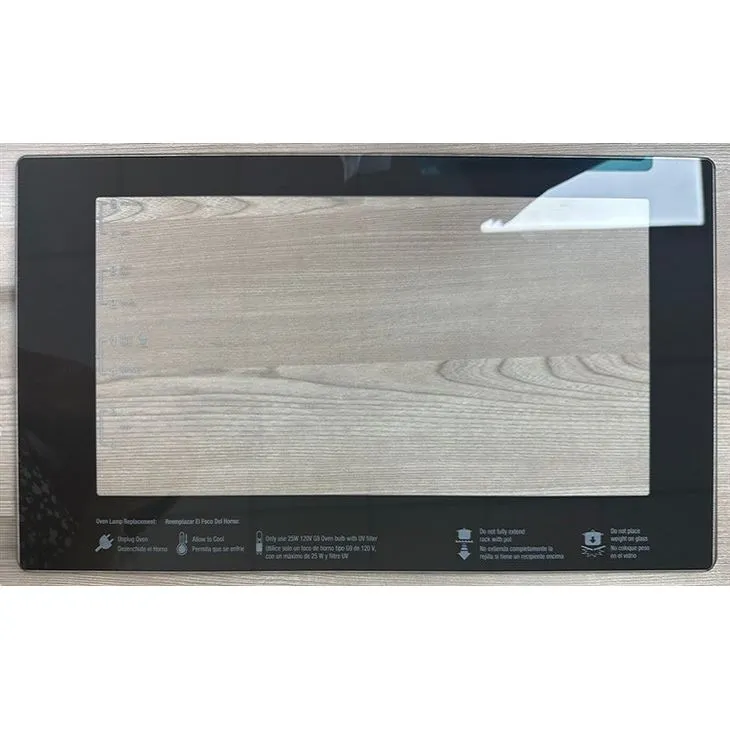
At our company, we offer a range of tempered glass products for oven door inners, including 3mm 4mm Screen Printing Oven Tempered Glass. This type of glass is available in different thicknesses and can be customized with screen printing for added functionality and aesthetics.

Low-E Glass
Low-emissivity (Low-E) glass is another material commonly used for glass oven door inners. It is a type of coated glass that has a thin, transparent layer of metal or metallic oxide applied to its surface. This coating reduces the amount of infrared and ultraviolet radiation that can pass through the glass, while still allowing visible light to transmit.
The primary benefit of Low-E glass is its excellent thermal insulation properties. By reducing the transfer of heat through the glass, Low-E glass helps to keep the oven's interior temperature stable, resulting in more efficient cooking and energy savings. It also helps to prevent heat from escaping the oven, which can reduce the load on the oven's heating elements and extend their lifespan.
In addition to its thermal insulation properties, Low-E glass also offers protection against harmful UV rays. This can help to prevent fading and discoloration of food and other items inside the oven. Our Screen Print Tempered Glass Panel is available with Low-E coating, providing enhanced energy efficiency and protection.
Ceramic Glass
Ceramic glass is a specialized type of glass that is designed to withstand extremely high temperatures. It is made from a combination of glass and ceramic materials, which gives it unique properties such as high thermal shock resistance and low thermal expansion.
One of the main advantages of ceramic glass is its ability to maintain its transparency even at high temperatures. This makes it an ideal choice for oven doors, as it allows users to monitor the cooking process without any distortion or discoloration. Ceramic glass is also highly resistant to scratches and stains, making it easy to clean and maintain.
However, ceramic glass is more expensive than tempered glass and Low-E glass, and it may require special handling and installation procedures. At our company, we offer Belling Inner Door Glass, which is made from high-quality ceramic glass and is designed to meet the specific requirements of Belling ovens.
Laminated Glass
Laminated glass is a type of safety glass that consists of two or more layers of glass bonded together with a layer of polyvinyl butyral (PVB) or ethylene-vinyl acetate (EVA) interlayer. This interlayer holds the glass together when it breaks, preventing it from shattering into sharp pieces.
Laminated glass offers several benefits for glass oven door inners. It provides excellent sound insulation, reducing the noise level inside the kitchen during cooking. It also offers enhanced security, as it is more difficult to break than regular glass. Additionally, laminated glass can be customized with different colors and patterns, allowing for greater design flexibility.
However, laminated glass is heavier and more expensive than tempered glass and may require additional support structures to ensure proper installation. At our company, we can provide customized laminated glass solutions for oven door inners based on your specific requirements.
Conclusion
In conclusion, there are several materials available for glass oven door inners, each with its own unique properties and benefits. Tempered glass is a popular choice due to its strength, safety, and scratch resistance. Low-E glass offers excellent thermal insulation and UV protection, while ceramic glass is ideal for high-temperature applications. Laminated glass provides enhanced sound insulation and security.
As a leading supplier of glass oven door inner materials, we are committed to providing our customers with high-quality products that meet their specific needs. Whether you are looking for tempered glass, Low-E glass, ceramic glass, or laminated glass, we have the expertise and resources to provide you with the right solution.
If you are interested in learning more about our glass oven door inner products or would like to discuss your specific requirements, please feel free to contact us. We look forward to working with you to provide the best glass solutions for your oven doors.
References
- ASTM International. (2023). Standard Specification for Tempered Flat Glass for Safety. ASTM C1048-23.
- Glass Association of North America. (2023). Low-E Glass: Understanding the Basics.
- National Fire Protection Association. (2023). NFPA 251: Standard Methods of Tests of Fire Resistance of Building Construction and Materials.