

How does borosilicate glass compare to soda - lime glass?
As a supplier of borosilicate glass, I often get asked about how borosilicate glass stacks up against soda - lime glass. Both types of glass have their own unique properties, applications, and advantages. In this blog post, I'll dive deep into a comprehensive comparison of these two popular glass materials.
Composition
Let's start with the basics: composition. Soda - lime glass is the most common type of glass in the world. It is primarily made from silica sand, soda ash (sodium carbonate), and limestone (calcium carbonate). These raw materials are readily available and relatively inexpensive, which is one of the reasons why soda - lime glass is so widely used.
On the other hand, borosilicate glass contains boron trioxide in addition to silica, soda, and lime. The addition of boron trioxide gives borosilicate glass its distinctive properties. The typical composition of borosilicate glass includes about 70 - 80% silica, 7 - 13% boron trioxide, and smaller amounts of other oxides such as sodium oxide and aluminum oxide.
Thermal Properties
One of the most significant differences between borosilicate glass and soda - lime glass lies in their thermal properties. Soda - lime glass has a relatively high coefficient of thermal expansion. This means that when it is heated or cooled, it expands or contracts significantly. As a result, soda - lime glass is more prone to thermal shock. Thermal shock occurs when a material experiences a rapid change in temperature, causing internal stress that can lead to cracking or shattering. For example, pouring hot liquid into a cold soda - lime glass container can cause it to break.
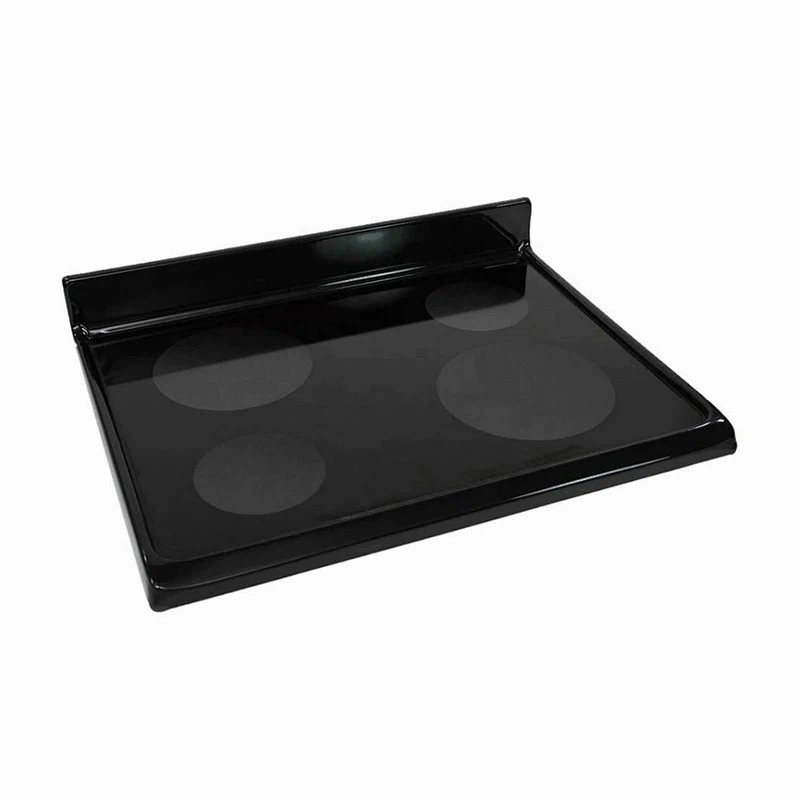
In contrast, borosilicate glass has a much lower coefficient of thermal expansion. It can withstand rapid temperature changes without cracking or breaking. This makes borosilicate glass ideal for applications where it will be exposed to high temperatures or sudden temperature variations. For instance, laboratory glassware, such as beakers and test tubes, is often made of borosilicate glass because it can be heated directly over a flame without the risk of thermal shock. Our Intelligent Heating Control Panel Glass is also made of borosilicate glass, ensuring its stability under high - temperature working conditions.
Chemical Resistance
Chemical resistance is another area where borosilicate glass outperforms soda - lime glass. Soda - lime glass is more reactive to chemicals, especially alkaline substances. Over time, exposure to certain chemicals can cause the surface of soda - lime glass to become etched or corroded. This can affect the clarity and integrity of the glass.
Borosilicate glass, however, has excellent chemical resistance. It is highly resistant to most acids, alkalis, and organic solvents. This property makes it suitable for use in chemical laboratories, pharmaceutical industries, and food and beverage processing. For example, borosilicate glass bottles are commonly used to store chemicals and pharmaceuticals because they can prevent the contents from reacting with the glass and maintain the purity of the substances.
Strength and Durability
In terms of strength, soda - lime glass is generally stronger than borosilicate glass in terms of its ability to withstand mechanical stress at room temperature. Soda - lime glass can be tempered to increase its strength even further. Tempered soda - lime glass is often used in applications such as windows, doors, and automotive windshields because it can withstand impact and break into small, relatively harmless pieces when shattered.
Borosilicate glass, while not as strong as tempered soda - lime glass in terms of mechanical impact resistance, has better long - term durability due to its superior thermal and chemical properties. It is less likely to degrade over time due to exposure to heat and chemicals. Our Kitchen Tempered Glass is made of borosilicate glass, providing both durability and safety in the kitchen environment.
Optical Properties
Both borosilicate glass and soda - lime glass can have excellent optical clarity. However, borosilicate glass may have slightly better optical properties in some cases. It has a lower refractive index and dispersion compared to soda - lime glass, which can result in less distortion and better light transmission. This makes borosilicate glass a preferred choice for applications where high - quality optics are required, such as in lenses and optical instruments.
Cost
Cost is an important factor in any material selection. Soda - lime glass is generally less expensive than borosilicate glass. The raw materials for soda - lime glass are cheaper, and the manufacturing process is also more straightforward. This makes soda - lime glass the go - to choice for many mass - produced consumer products where cost is a major consideration.
Borosilicate glass, on the other hand, is more expensive due to the higher cost of its raw materials (especially boron trioxide) and the more complex manufacturing process. However, the superior properties of borosilicate glass often justify the higher cost in applications where performance is critical.

Applications
The differences in properties between borosilicate glass and soda - lime glass lead to different applications. Soda - lime glass is widely used in everyday products such as drinking glasses, bottles, windows, and mirrors. Its low cost and relatively good mechanical strength make it suitable for these common applications.
Borosilicate glass, with its excellent thermal and chemical resistance, is used in more specialized applications. In addition to laboratory glassware and heating control panel glass, it is also used in cookware, lighting fixtures, and high - end optical components. Our Kitchen Tempered Glass Factory produces high - quality borosilicate glass products for the kitchen, taking advantage of its unique properties to meet the needs of modern kitchens.
Conclusion
In conclusion, both borosilicate glass and soda - lime glass have their own strengths and weaknesses. Soda - lime glass is a cost - effective option for many general - purpose applications, offering decent mechanical strength at a low price. Borosilicate glass, however, shines in applications where thermal stability, chemical resistance, and optical quality are of utmost importance.
If you are in the market for glass products and need a material that can withstand high temperatures, resist chemicals, or provide superior optical performance, borosilicate glass is the way to go. As a borosilicate glass supplier, we are committed to providing high - quality borosilicate glass products to meet your specific needs. Whether you are a laboratory, a kitchenware manufacturer, or an optical equipment producer, we can offer you the right solutions.
If you are interested in our borosilicate glass products or have any questions about glass selection, please feel free to contact us for procurement and negotiation. We look forward to working with you to find the best glass solutions for your projects.
References
- "Glass Science and Technology" by David R. Uhlmann and Narottam P. Bansal
- "Handbook of Glass Properties" edited by Werner Vogel