

What are the applications of borosilicate glass in the laboratory?
Hey there! If you're into the lab scene or just curious about cool materials, you've come to the right place. I'm part of a borosilicate glass supplier, and let me tell you, borosilicate glass is like the unsung hero of the laboratory world. It's got some seriously awesome properties that make it a top choice for all sorts of lab applications.
First off, let's talk about what makes borosilicate glass so special. This type of glass is made by adding boron trioxide to the glass mixture. This addition gives borosilicate glass a low coefficient of thermal expansion. In plain English, it means that it doesn't expand or contract much when it's heated or cooled. This is a huge deal in the lab because a lot of experiments involve temperature changes. Normal glass would crack or shatter under these conditions, but borosilicate glass can handle it like a champ.
One of the most common applications of borosilicate glass in the lab is in glassware. You've probably seen those beakers, test tubes, and flasks in science movies or your high - school chemistry class. Well, a big chunk of this lab glassware is made from borosilicate glass. Beakers are super useful for mixing, stirring, and heating liquids. You can pour a hot solution into a borosilicate beaker without worrying about it shattering. Test tubes are perfect for holding small amounts of substances during experiments. You can heat a test tube filled with a chemical compound over a Bunsen burner, and the borosilicate glass will resist cracking due to the temperature change. Flasks, like Erlenmeyer flasks and round - bottom flasks, are used for various reactions and distillation processes. Their borosilicate construction ensures that they can withstand both the chemical reactions taking place inside and the heat that might be applied from the outside.
Another important use is in pipettes and burettes. These are precision instruments used for measuring and transferring small volumes of liquids. Borosilicate glass is used because it has high transparency. You can clearly see the liquid inside the pipette or burette, which is crucial for accurate measurements. Also, its smooth surface means that the liquid flows easily through the instrument, reducing the chances of errors in volume measurement.
Borosilicate glass is also a key component in laboratory condensers. Condensers are used in distillation processes to cool and condense vapors back into liquids. The low thermal expansion of borosilicate glass allows it to handle the constant temperature changes that occur during the condensation process. It can go from being hot when the vapor enters to cold when the cooling water is circulated around it, without any structural damage. This ensures that the distillation process runs smoothly and efficiently.
In addition to these common applications, borosilicate glass is used in some advanced laboratory equipment. For example, in spectroscopy, which is a technique used to study the interaction between matter and electromagnetic radiation. The sample cells used in spectrophotometers are often made of borosilicate glass. Its transparency in the visible and near - ultraviolet regions of the electromagnetic spectrum makes it ideal for this purpose. You can accurately measure the absorption or emission of light by a sample when it's placed in a borosilicate glass cell.
Now, let's talk about some of the products we offer as a borosilicate glass supplier. We have the 3mm 4mm High Temperature Borosilicate Glass Door. This glass door is perfect for lab ovens or other high - temperature equipment. It can withstand high temperatures without warping or cracking, and you can still see what's going on inside the equipment through the transparent glass.
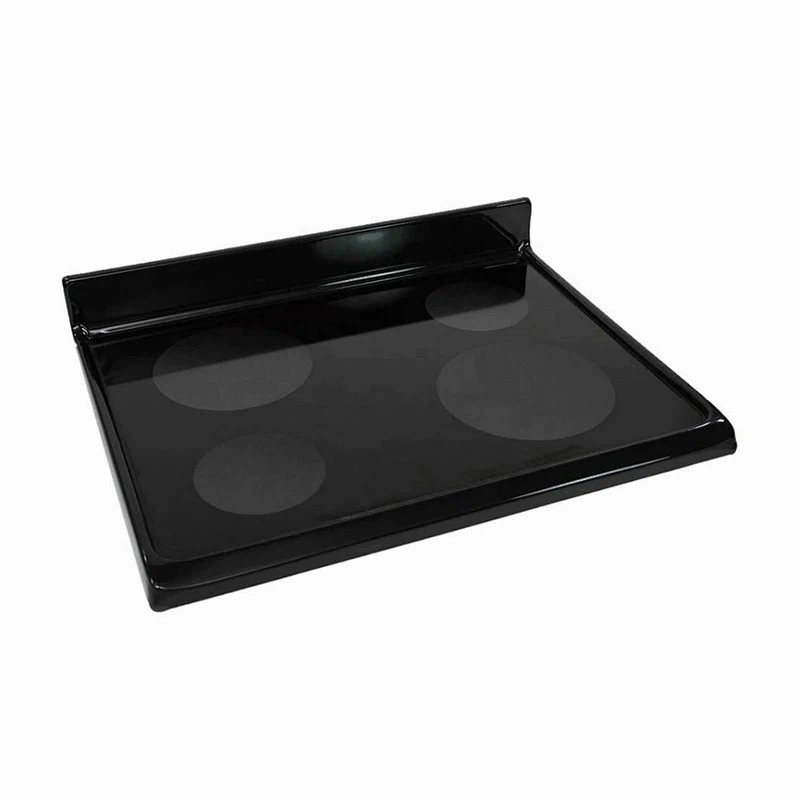
We also have Kitchen Tempered Glass. While it's not strictly a laboratory product, it shows the versatility of borosilicate glass. This tempered glass is strong and heat - resistant, making it suitable for kitchen appliances like ovens and stoves. It's similar to the borosilicate glass used in the lab in terms of its thermal properties.
And then there's the Glass Panel Printer Touch Screen. In modern labs, touch - screen technology is becoming more and more important. Our borosilicate glass touch screens are durable, scratch - resistant, and have good optical properties. They can be used in various lab control systems and monitoring devices.

If you're in the market for borosilicate glass products for your laboratory, we're here to help. Whether you need standard lab glassware or custom - made borosilicate glass components, we've got the expertise and the products to meet your needs. Just get in touch with us to start a conversation about your requirements. We're always happy to discuss how our borosilicate glass can enhance your lab operations.
References
- "The Properties and Applications of Borosilicate Glass" - A general scientific publication on glass materials.
- "Laboratory Glassware: A Guide for Scientists" - A book that details the different types of glassware used in labs and their materials.